
Heating & Heat Loss
- Reduce heat loss by using a pool cover. According to the U.S. Department of Energy, savings of 50% – 70% are possible.
- Fencing, hedges, landscaping, and cabanas that shelter your pool from prevailing winds will further reduce heat loss.
- If your pool heater is more than five years old, chances are a new high efficiency gas heater could quickly pay for itself in utility bill savings.
- A pool heat pump can save up to 80% in energy usage compared to a gas heater. Check with your pool professional to see if a heat pump is appropriate for your region.
- If you use your pool only on weekends, reduce your heater or heat pump thermostats settings by eight to ten degrees during the week.
- When leaving for vacation for more than a week, turn off the pool heater or heat pump, including the pilot light. Please use caution in freezing conditions.
- According to the National Swimming Pool Institute and the American Red Cross, the most healthful swimming temperature is 25.5ºC. Reducing your heater or heat pump thermostat to maintain a 25.5ºC or lower temperature will also help conserve energy.
- Install a timer or a control system to automate the hours of operation.
- When reopening your pool, make sure your heater or heat pump is working properly.
- View heaters
Circulation
- Replace your pool pump with a more energy-efficient model.
- New variable speed pumps with permanent magnet motors and digital controls can save as much as 90% in utility costs compared to one- or two-speed pumps with induction motors.
- If using an energy-efficient one- or two-speed pump, make sure your pump is sized to your pool’s requirements.
- View single speed pumps
- View variable speed pumps
- Reduce run time or speed to reduce energy use.
- If using a one-speed pump, reduce filtration run time. In general, water needs to be circulated through the filter once every 24 hours.
- If using a two-speed or variable speed pump, use the lowest speed to appropriately circulate the water. Reducing speed saves more energy than reducing run time.
- Run your pool’s filtration system during off-peak hours when electricity demand is lower, generally between 8 p.m. and 10 a.m. Install a timer or a control system to automate the hours of operation.
- Keep intake grates clear of debris. Clogged drains require the pump to work harder.
- To obtain maximum filtration and energy efficiency, backwash or clean your filter regularly, as required.
More tips and advice
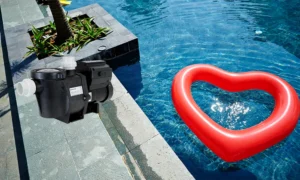
THE BASICS – THE SWIMMING POOL PUMP
The Heart of the Pool’s Circulation System. The pump moves water through the filter, heater or heat pump, salt chlorine generator,…
More tips and advice
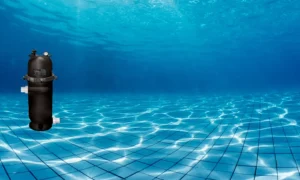
THE BASICS – SWIMMING POOL WATER FILTRATION
Clean, Clear, Sparkling Water. By removing impurities such as dirt, leaves, grass, hair, body oils, sunscreen, and even many bacteria…
Posted in Pool Tips